
Root Canal Treatment in Edgware
Root Canal Treatment in Edgware, Burnt Oak, Mill Hill, Hendon and Stanmore
If you are experiencing severe toothache, extreme lingering sensitivity or pain when biting or touching the tooth, you may need root canal treatment if the soft tissue or pulp inside your tooth is compromised. At R-Dental, we provide endodontic care and root canal treatment in Edgware to help treat infection inside a tooth, relieve discomfort and preserve your natural teeth wherever possible.
Based in Edgware, our private dental practice welcomes patients from Burnt Oak, Mill Hill, Hendon, Stanmore and the surrounding areas. Whether you have been referred by your dentist or are looking for advice about a painful tooth, our team will assess your symptoms, explain the treatment options and help you understand the best way forward.
Our priority is to provide careful, considered treatment designed to protect your oral health and help you keep your natural smile for as long as possible.
What Is Endodontics?
Endodontics is the area of dentistry concerned with the inside of the tooth, including the dental pulp, which contains nerves and blood vessels. When the pulp becomes inflamed or infected, root canal treatment may be recommended to remove the affected tissue, clean the inside of the tooth and seal it to help prevent further infection. (See the British Endodontic Society –https://britishendodonticsociety.org.uk/default.aspx
The pulp can become damaged following deep decay, a crack or fracture, trauma to the tooth, or repeated dental treatment. Without appropriate treatment, infection may develop around the root and can sometimes lead to an abscess.
Root canal treatment is designed to remove the source of infection while retaining the natural tooth. In many cases, saving a tooth in this way can be preferable to extraction, although the most appropriate option will depend on the condition of the tooth and your individual circumstances.
When Might You Need Root Canal Treatment?
Problems affecting the dental pulp do not always cause obvious symptoms at first. However, there are several signs that may indicate the need for an endodontic assessment.
Common Symptoms of an Infected Tooth
You may need to see a dentist if you experience:
- Persistent or severe toothache.
- Sensitivity to hot or cold food and drinks that lingers after the stimulus has been removed.
- Pain when chewing or biting down.
- Swelling or tenderness around the affected tooth or gum.
- A darkening or discolouration of a tooth.
- A small swelling or recurring spot on the gum near a tooth.
- An unpleasant taste associated with an infected area.
These symptoms can have several possible causes, so an examination is needed to establish what is happening. If you have significant swelling, fever or difficulty swallowing or breathing, seek urgent medical or dental advice; difficulty breathing or swallowing requires emergency care.
Even if a tooth is not painful, an infection may sometimes be identified during a routine examination or on a dental X-ray. Seeking advice early can help your dentist determine whether treatment is needed and which options are appropriate.
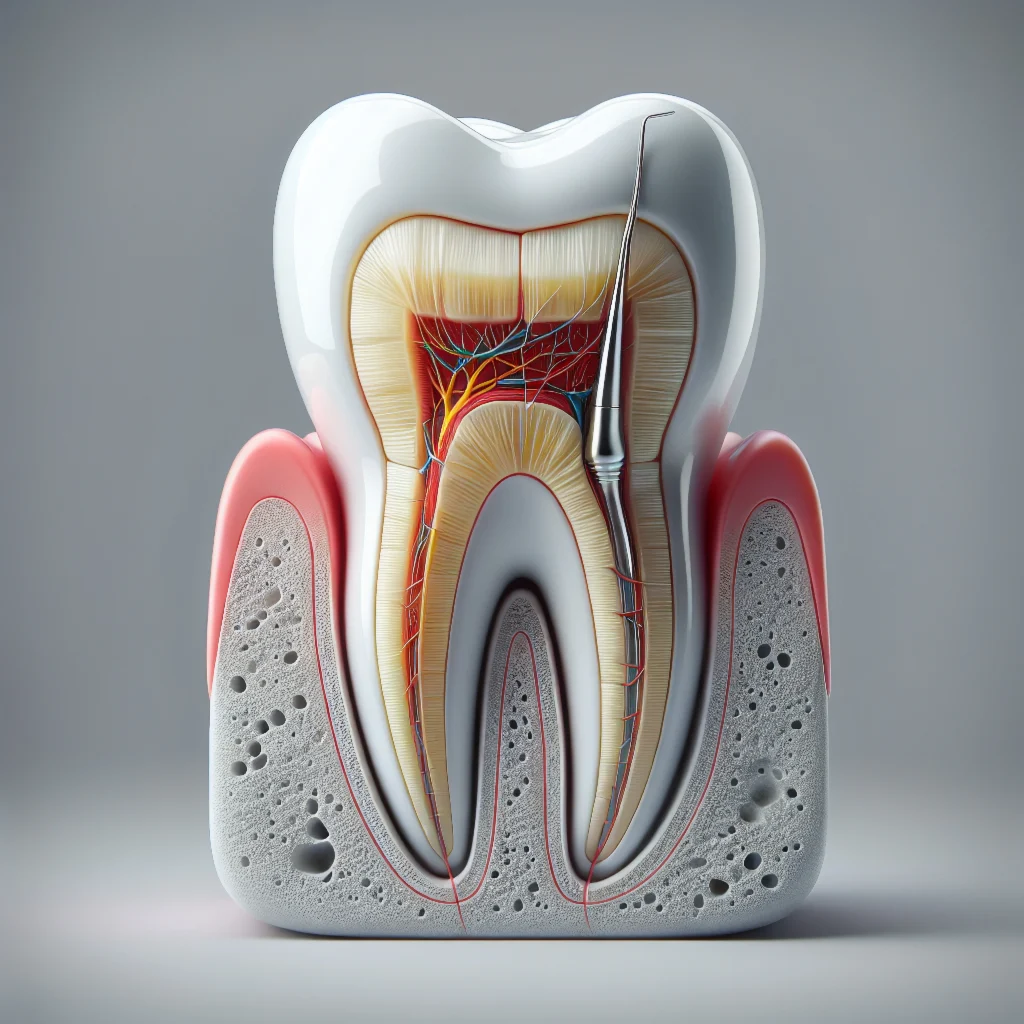
What Happens During Root Canal Treatment?
At R-Dental in Edgware, we take time to assess the affected tooth and explain the recommended treatment before proceeding. The process will vary depending on the tooth, the complexity of the root canals and the extent of the infection.
1. Assessment and Diagnosis
Your appointment begins with a discussion of your symptoms and dental history, followed by an examination of the affected tooth. Dental X-rays may be taken to help assess the roots and surrounding bone, identify signs of infection and plan treatment.
We will explain our findings and discuss the available options so you can make an informed decision.
2. Making the Tooth Comfortable
Root canal treatment is usually carried out under local anaesthetic to numb the tooth and surrounding area. The aim is to make the procedure as comfortable as possible.
If you are anxious about dental treatment, let us know before your appointment so that we can discuss your concerns and explain what to expect.
3. Cleaning the Root Canals
A small opening is made in the tooth to access the pulp chamber and root canals. The damaged or infected pulp is removed, and the canals are carefully cleaned and shaped.
The canals are then filled and sealed to help prevent bacteria from re-entering the tooth. Depending on the complexity of the case, treatment may be completed in one or more appointments.
4. Restoring the Tooth
Following root canal treatment, the tooth will need a suitable restoration to protect it and restore its function. Depending on the amount of remaining healthy tooth structure and the tooth’s position, this may involve a filling or a crown.
Your dentist will explain which restoration is appropriate and whether any further appointments are required.
Can Root Canal Treatment Save Your Natural Tooth?
One of the main benefits of root canal treatment is that it can allow you to keep a natural tooth that might otherwise need to be removed.
Your natural teeth play an important role in chewing, speech and maintaining the position of neighbouring teeth. Where a tooth can be predictably treated and restored, preserving it may help maintain the function and structure of your smile.
However, not every tooth can be saved. The extent of damage, the amount of healthy tooth remaining, the condition of the supporting tissues and the feasibility of restoring the tooth all influence the outcome. Your dentist will explain the likely benefits, limitations and alternatives before recommending treatment. For instance, dental implants could be an option – https://r-dental.uk/dental-implants-in-edgware/
Aftercare Following Root Canal Treatment
It is normal to experience some tenderness around the treated tooth for a short time after the procedure. This should gradually improve, although the recovery period varies from person to person.
To support your recovery:
- Follow the aftercare instructions provided by your dentist.
- Avoid chewing hard foods on the treated tooth until it has been fully restored, particularly if a temporary filling is in place.
- Maintain good oral hygiene by brushing twice a day and cleaning between your teeth.
- Attend any recommended appointments to complete treatment and fit the final restoration.
- Contact your dentist if pain or swelling worsens, symptoms return, or your bite feels uncomfortable after treatment.
A root-filled tooth can remain functional for many years, but its long-term success depends on factors such as the quality of the root canal treatment, the final restoration and ongoing oral care. Regular dental check-ups help your dentist monitor the tooth and your overall oral health.
Types of Endodontics

Root canal treatment

Reroot canal treatment

removal of fractured posts

Apicoectomy
Common Treatments

Root Canal Therapy
Removes infected or damaged tissue from inside the tooth to save it and relieve pain.
Why Choose R-Dental for Root Canal Treatment in Edgware?
At R-Dental, we understand that toothache and the prospect of root canal treatment can be worrying. We aim to make the experience as straightforward as possible by providing clear explanations, a considered approach to diagnosis and treatment tailored to your needs.
Patients choose R-Dental for:
- A personalised approach: Treatment recommendations are based on your symptoms, examination findings and individual dental needs.
- Clear communication: We explain the proposed treatment, expected stages and relevant alternatives before you decide how to proceed.
- A focus on preserving natural teeth: Where appropriate, root canal treatment may help retain a tooth rather than remove it.
- A comprehensive approach to dental care: We consider how the affected tooth fits into your wider oral health and restorative needs.
- Convenient local access: Our practice in Edgware welcomes patients from Burnt Oak, Mill Hill, Hendon, Stanmore and nearby areas.
If you have been advised to have root canal treatment, or you are experiencing symptoms that may indicate an infection, contact R-Dental to arrange an assessment.
Root Canal Treatment in Edgware and the Surrounding Areas
R-Dental is based on Burnt Oak Broadway in Edgware, making the practice accessible to patients from across the local area.
We welcome patients from Edgware, Burnt Oak, Mill Hill, Hendon and Stanmore who need advice about tooth pain, possible dental infection or root canal treatment.
You may be referred to us by your usual dentist, or you may wish to contact the practice to discuss your symptoms and arrange an appointment. We will help you understand the next steps following an initial assessment.
If you are looking for root canal treatment near you, contact R-Dental to find out how we can help.
Benefits of Endodontics

Saves natural teeth
Relieves toothache and infection
Restores normal chewing and function
If you're experiencing tooth pain or sensitivity disturbed sleep due to the pain and extreme sensitivity, our gentle and effective endodontic care can help.
Book a Root Canal Consultation at R-Dental
Persistent toothache, sensitivity or swelling should not be ignored. Early assessment can help identify the cause of your symptoms and establish whether root canal treatment or another form of dental care is needed.
If you are looking for endodontic treatment in Edgware, Burnt Oak, Mill Hill, Hendon or Stanmore, contact R-Dental to discuss your concerns and arrange an appointment.
Contact R-Dental
Telephone: 0203 781 7066
Email: dentist@r-dental.uk
Address: 98 Burnt Oak Broadway, Edgware, HA8 0BE
https://r-dental.uk/contact-us/
Send Us An Enquiry!
Frequently Asked Questions
What is endodontics?
It’s the dental specialty for treating the inside of the tooth (pulp and root).
What is a root canal?
A procedure to remove infected pulp and save the tooth.
Is root canal treatment painful?
Root canal treatment is usually performed under local anaesthetic, which numbs the tooth and surrounding area. The procedure is intended to treat the source of pain rather than cause additional discomfort. Some tenderness afterwards is possible, but this generally improves over time. If you are worried about treatment, discuss your concerns with your dentist beforehand.
How many appointments will I need for root canal treatment?
Some cases can be completed in one appointment, while others require two or more visits. The number of appointments depends on the tooth being treated, the complexity of its root canals and the extent of the infection. Your dentist will explain the likely treatment plan following your assessment.
How long does a root canal treatment take?
The length of an appointment varies depending on the tooth and the complexity of the procedure. Treatment on a tooth with several canals may take longer than treatment on a tooth with a simpler root structure. Your dentist will give you a clearer idea of the expected appointment time once the tooth has been examined. Appointments can usually range from 45 minutes to 2 hours depending on complexity.
Can a root-filled tooth become infected again?
Yes. Although root canal treatment aims to remove infection and seal the inside of the tooth, problems can sometimes recur. This may happen if bacteria re-enter the tooth, the restoration becomes damaged or the original infection does not fully resolve. Further assessment may be needed if symptoms return. Re-root canal treatment may be needed.
Will I need a crown after root canal treatment?
Not every root-filled tooth needs a crown. The decision depends on how much healthy tooth structure remains, the position of the tooth and the forces placed on it when chewing. A crown may be recommended to protect a weakened tooth and reduce the risk of fracture. Your dentist will advise you on the most appropriate restoration.
Is it better to have a root canal or an extraction?
The right option depends on whether the tooth can be predictably treated and restored, as well as your wider dental health. Root canal treatment may allow you to retain your natural tooth, while extraction removes the source tooth but can create a need to consider replacement options. Your dentist will explain the advantages, disadvantages and costs of each suitable option.
What happens after treatment?
The tooth is sealed and usually covered with a crown.


