
Dental Microabrasion
Dental microabrasion in Edgware at R-Dental can help you if you have noticed white spots, superficial stains or small imperfections on the surface of your teeth.
This minimally invasive dental technique is used to remove a very thin layer of surface enamel to improve the appearance of certain types of discolouration.
At R-Dental, based in Edgware, we help patients from Burnt Oak, Mill Hill, Hendon, Stanmore and the surrounding areas understand the options available for improving the appearance of their teeth. The right treatment depends on the cause, depth and extent of the discolouration, as well as the condition of your enamel.
Microabrasion is not suitable for every type of tooth staining or enamel defect. An assessment allows your dentist to establish whether it is likely to help or whether an alternative cosmetic dental treatment would be more appropriate.
What Is Dental Microabrasion?
Dental microabrasion is a conservative, aesthetic dental procedure used to improve selected superficial enamel imperfections. It involves applying a specialised abrasive preparation to the affected area of the tooth, under controlled clinical conditions, to remove a very small amount of the outer enamel. (More on dental microabrasion here – https://www.colgate.com/en-gb/oral-health/teeth-whitening/what-is-enamel-microabrasion
The technique can help reduce certain surface-level white or brown marks and improve the overall appearance of affected teeth. Because it removes a small amount of enamel, careful assessment is important to determine whether the procedure is appropriate for your teeth.
Microabrasion differs from professional teeth cleaning, which removes plaque and external deposits, and from teeth whitening, which lightens tooth colour using bleaching agents. Each treatment addresses different causes of discolouration, so choosing the right approach begins with understanding why the marks have developed.
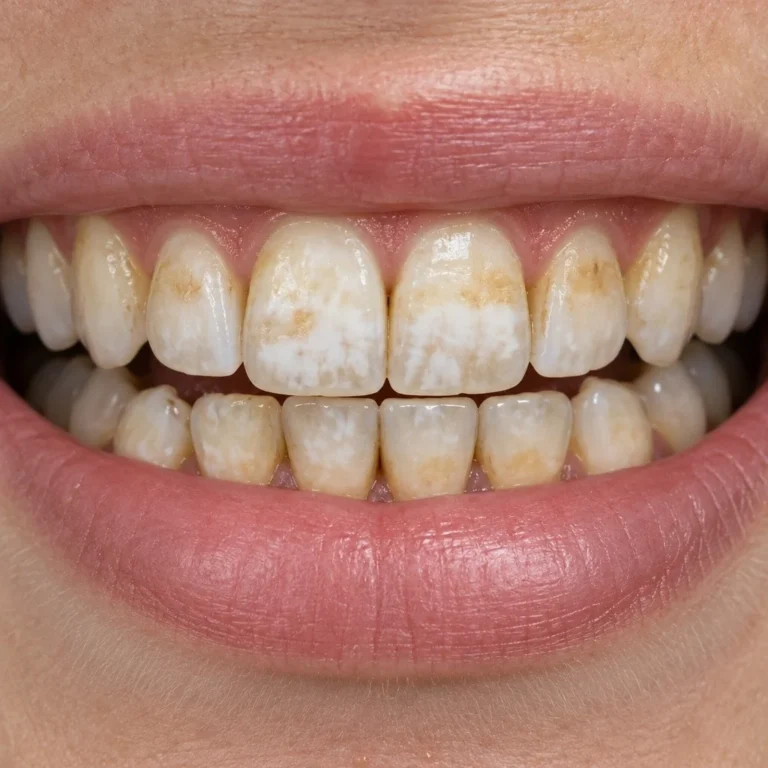
What Tooth Imperfections Can Microabrasion Treat?
Dental microabrasion may be suitable for specific superficial enamel defects, but its effectiveness depends on the nature of the problem.
White Spots on Teeth
White spots can develop for several reasons, including changes in enamel formation, early mineral loss or fluorosis. Some superficial white marks may respond to microabrasion, while deeper or more extensive defects may require a different treatment.
Your dentist will assess the appearance and likely cause of the marks before recommending a suitable option.
Brown or Yellow Surface Discolouration
Certain superficial brown or yellow enamel stains may be improved through microabrasion. However, not all tooth discolouration is located within the outer enamel.
If the colour change originates deeper within the tooth or is caused by factors such as trauma or changes to the tooth’s internal structure, microabrasion may have limited benefit. Other treatments may be more appropriate.
Minor Enamel Irregularities
Some small, superficial enamel imperfections can affect how evenly a tooth reflects light. In selected cases, microabrasion may help create a more uniform appearance by gently modifying the affected surface.
The procedure is not designed to correct significant enamel loss, deep defects, structural damage or substantial changes in tooth shape.
Benefits of Dental Microabrasion

Quick and painless
No needles or drilling
Immediate cosmetic results
A simple way to achieve a smoother, more even smile - often in just one visit!
Is Microabrasion Right for You?
The first step is a dental examination to determine the cause of the discolouration and assess the thickness and condition of the enamel.
Microabrasion is generally considered for selected surface-level enamel imperfections. It may be less suitable when marks extend deeper into the tooth, when enamel is already thin or damaged, or when the discolouration is caused by an underlying dental problem that needs separate treatment.
During your consultation, your dentist can discuss:
- The likely cause of the marks or discolouration.
- Whether the affected area appears suitable for microabrasion.
- The potential benefits and limitations of treatment.
- Whether alternative treatments may provide a more predictable result.
- The risks of removing additional enamel and the importance of preserving healthy tooth structure.
The aim is to recommend an approach that balances cosmetic improvement with the long-term health of your teeth.
What Happens During Dental Microabrasion?
If microabrasion is considered suitable, your dentist will explain the procedure and what you can realistically expect from treatment.
1. Examination and Assessment
Your dentist will examine your teeth and discuss your concerns. The pattern, colour and depth of the enamel marks help determine whether microabrasion is likely to be effective.
Other possible causes of discolouration will be considered so that an underlying issue is not overlooked.
2. Treatment Planning
Your dentist will explain the proposed approach, including the likely degree of improvement and any limitations. If the marks are too deep or microabrasion is unlikely to achieve the desired result, alternative options may be discussed.
These may include professional whitening, resin infiltration, composite bonding or other cosmetic treatments, depending on the diagnosis and your individual needs.
3. Applying the Microabrasion Treatment
During the procedure, a specialised abrasive preparation is applied to the selected enamel surface using a controlled technique. The aim is to remove a very thin layer of enamel and reduce the appearance of suitable superficial imperfections.
The amount of enamel removed must be carefully controlled. Your dentist will determine whether further treatment is appropriate based on the response of the tooth and the amount of enamel that can safely be removed.
4. Reviewing the Result
Following treatment, your dentist will assess the appearance of the treated teeth and explain whether the result meets the intended objective. Some imperfections may become less noticeable without disappearing completely.
If further improvement is needed, your dentist can discuss whether another conservative treatment might be appropriate rather than removing additional enamel.
Ideal For

White spots from weak Enamel or Fluorosis, Intrinsic stains that brushing can’t remove

Surface stains that brushing can’t remove

Improving overall tooth appearance without drilling
What Are the Benefits of Dental Microabrasion?
For appropriately selected cases, dental microabrasion offers several potential advantages.
- Conservative cosmetic treatment: It removes only a very thin layer of enamel from the affected surface.
- Improved appearance: It may reduce the visibility of certain superficial white or brown marks.
- Preservation of natural teeth: It can improve selected imperfections without necessarily requiring a filling, composite bonding or a veneer.
- A targeted approach: Treatment focuses on specific affected areas rather than changing the colour of every tooth.
- Potentially straightforward treatment: The procedure may be completed in a single dental appointment, depending on the extent and complexity of the case.
The results vary according to the cause and depth of the imperfections. Your dentist will explain whether microabrasion is likely to deliver a worthwhile improvement in your particular case.
Microabrasion vs Teeth Whitening and Other Cosmetic Treatments
Microabrasion and teeth whitening are sometimes confused, but they work in different ways.
Microabrasion removes a very thin layer of the outer enamel to improve selected superficial imperfections.
Teeth whitening uses bleaching agents to lighten the overall colour of natural teeth. It does not remove enamel in the same way as microabrasion.
Resin infiltration may be considered for certain white-spot lesions, depending on their cause and characteristics. It works differently from microabrasion and may be more appropriate in selected cases.
Composite bonding can be used to mask or reshape areas where a surface defect cannot be adequately improved with microabrasion alone.
Porcelain veneers may be considered for more extensive cosmetic concerns in suitable cases, although they involve a different level of treatment and may require irreversible alteration of tooth structure.
The most appropriate treatment depends on the diagnosis, the condition of your teeth and your desired outcome. A dental examination helps identify the most conservative suitable option. More on the cosmetic options we offer here – https://r-dental.uk/prosthodontist-in-burnt-oak/
Why Choose R-Dental for Cosmetic Dental Advice?
At R-Dental, we take an individual approach to dental treatment, considering both the appearance and long-term health of your teeth.
Patients can discuss concerns about enamel marks, white spots and tooth discolouration with our team and receive advice on the options that may be appropriate for their circumstances.
Our approach focuses on:
- Individual assessment: Understanding the cause of discolouration before recommending treatment.
- Conservative treatment planning: Considering options that preserve healthy tooth structure wherever possible.
- Clear explanations: Discussing the potential benefits, limitations and risks of different treatments.
- A comprehensive view of oral health: Considering the condition of your enamel and teeth alongside your cosmetic goals.
- Convenient local access: Welcoming enquiries from Edgware, Burnt Oak, Mill Hill, Hendon, Stanmore and nearby areas.
We will help you understand whether microabrasion is suitable or whether another treatment may be better suited to your needs.
Dental Microabrasion in Edgware and the Surrounding Areas
R-Dental is located at Burnt Oak Broadway in Edgware, providing access to dental care for patients from across the surrounding area.
If you are concerned about white spots, superficial enamel marks or other forms of tooth discolouration, you can contact us to discuss your concerns and arrange an assessment.
We welcome enquiries from Edgware, Burnt Oak, Mill Hill, Hendon, Stanmore and beyond. Following an examination, we can explain the options available and help you decide whether microabrasion or another cosmetic dental treatment may be appropriate.
If you are searching for tooth microabrasion near you, contact R-Dental to find out more.
Book a Cosmetic Dental Consultation at R-Dental
If you are concerned about white spots, superficial enamel marks or uneven tooth colour, a dental assessment can help establish the cause and identify suitable treatment options.
If you are looking for dental microabrasion in Edgware, Burnt Oak, Mill Hill, Hendon or Stanmore, contact R-Dental to discuss your concerns and arrange an appointment.
Contact R-Dental
Telephone: 0203 781 7066
Email: dentist@r-dental.uk
Address: 98 Burnt Oak Broadway, Edgware, HA8 0BE
Send Us An Enquiry!
Frequently Asked Questions
What is dental microabrasion?
Dental microabrasion is a dental procedure that removes a very thin layer of outer enamel to improve certain superficial imperfections, such as selected white or brown marks. It is a targeted treatment and is not suitable for every type of tooth discolouration.
Can microabrasion remove white spots on teeth?
It can improve some white spots that affect the superficial enamel, but results depend on the cause and depth of the marks. Other treatments, such as resin infiltration, may be more appropriate for certain types of white-spot lesion. Your dentist can assess the options.
Is dental microabrasion painful?
The procedure is generally well tolerated, although sensitivity or discomfort can vary depending on the condition of the teeth and the treatment required. Your dentist will explain what to expect and assess whether microabrasion is suitable before proceeding.
Does microabrasion damage tooth enamel?
Microabrasion deliberately removes a very small amount of enamel, so it is important that the procedure is carefully planned and controlled. Enamel does not regenerate. Your dentist will assess whether the expected cosmetic benefit justifies removing this small amount of tooth structure.
How long do the results of microabrasion last?
Results can be long-lasting because the superficial enamel defect has been modified or removed. However, the final appearance depends on the original cause of the marks, the treatment result and the condition of the teeth. New stains or other dental changes can still develop over time.
Is microabrasion better than teeth whitening?
Neither treatment is universally better because they address different concerns. Microabrasion targets selected superficial enamel imperfections, while whitening lightens the overall colour of natural teeth. Your dentist can recommend the most appropriate approach after assessing the type of discolouration.
Can microabrasion be combined with other cosmetic treatments?
In selected cases, microabrasion may be considered alongside another treatment, such as teeth whitening or resin infiltration. The order and suitability of treatments depend on the diagnosis and the desired outcome. Your dentist will explain whether combining treatments is appropriate.


